Free Shipping Over $99 CAD. Cast iron, delivered with care.
The Gift
of Craft
Thoughtful gifts for cooks, designers, and slow-living souls.

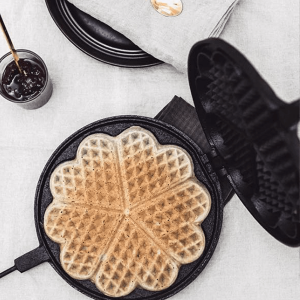
For centuries, the waffle has been the subject of culinary dedication, but the quest for perfection invariably leads to the most elemental of tools: the stovetop cast iron waffle iron. It is not merely a piece of kitchen equipment; it is a thermal engine. When handled correctly, it delivers a textural contrast that no electric appliance can replicate: a delicate, shatteringly crisp crust giving way to a light, cloud-like interior.
The apex of this tradition is often found in the handcrafted designs from foundries like Skeppshult of Sweden. As a master artisan’s choice, this tool exploits the precise and powerful thermal properties of iron, ensuring that the final waffle is not just cooked, but truly transformed. This comprehensive guide details the steps to leverage the unique quality of cast iron for an unparalleled breakfast experience.
Skeppshult, Scandinavia’s only remaining cast iron foundry, operates on a heritage of craftsmanship dating back to 1906. Their process involves hand-poured iron and environmentally controlled materials, resulting in a tool of extraordinary durability and performance. This traditional approach directly addresses the physics required for the perfect waffle.
| Skeppshult Feature | The Thermal Principle | Why it Creates a Better Waffle |
| High Mass Cast Iron | Heat Capacity: The thick, heavy iron retains immense thermal energy, acting as a true heat battery, unlike thin, aluminum-based electric plates. | It prevents the iron’s temperature from dropping significantly when cold batter is added, delivering the essential thermal shock for an immediate, aggressive sear. This instantaneous crust formation seals the exterior and maximizes internal steam pressure. |
| Precision-Milled Concave Base | Uniform Heat: The precisely flattened and sometimes slightly concave base ensures full, stable, and wobble-free contact with all stove surfaces, a critical detail for modern induction and glass-ceramic cooktops. | This guarantees perfectly even heat distribution from edge to center, eliminating cold spots that lead to soggy patches and ensuring a consistent, golden-brown waffle every time. |
| Organic Rapeseed Oil Seasoning | Natural Non-Stick: The deep polymerization of high-quality organic oil creates a robust, chemical-free, low-friction surface that improves with age and use. | It ensures a clean, confident release of the delicate waffle, preventing sticking and tearing, guaranteeing that the beautiful Scandinavian heart-shaped pattern remains intact for serving. |
Mastering the cast iron waffle iron is all about the setup. The biggest mistake is insufficient preheating; the iron must be blazing hot before it touches the batter. This step is non-negotiable for achieving the signature cast iron crisp.
Achieve Thermal Equilibrium
Heat Setting: Place the iron over a burner set to Medium-High. This setting is preferred over Max/High because it allows the dense iron to absorb heat slowly and evenly, preventing the center from scorching while the edges remain cool.
The Crucial Time: Preheat for a minimum of 10 to 12 minutes. You must flip the iron every 2 minutes during this time to ensure the cooking grids are heated symmetrically. The handles may also become hot, confirming the heat has fully permeated the metal.
Target Temperature: The ideal cooking surface temperature is between 375∘F and 400∘F (190∘C and 205∘C). A flicked water droplet should instantly sizzle and evaporate, indicating the metal is sufficiently charged with heat.
The Final Lube
Use a high smoke-point oil (canola, grapeseed, or avocado). High smoke point is essential because the iron is very hot, and low smoke-point fats (like unclarified butter) can burn and leave a sticky residue before the waffle is even cooked.
Application: Using a heat-safe silicone brush, apply a very thin, even coat of oil to both the top and bottom cooking grids after the iron is fully preheated. The goal is a glistening layer that acts as a shallow frying agent, not pooled oil that will steam the waffle.
The actual cooking is a controlled exercise in heat transfer and steam management. This is where a slightly acidic, yeasted batter shines, complementing the iron’s intense heat.
Sticking is overwhelmingly due to a failure in the preheat phase. The iron must be hot enough to form a crust instantly, otherwise, the starch and sugar in the batter will bond to the iron before the polymerization of the crust is complete.
The Fix: Increase your preheat time to the full 12 minutes on Medium-High. Before adding batter, verify the surface temperature (375∘Fto 400∘F). Ensure you are applying a thin, even coat of high smoke-point oil to both sides of the hot iron before each batch. A well-seasoned, perfectly hot iron should never stick.
Cast iron waffle irons should never be soaked or cleaned with harsh soap, which will degrade the seasoning.
Light Clean: While the iron is still warm (but not burning hot), use a stiff wire or nylon dish brush and hot running water to scrub out any residual crumbs or charred sugar.
Deep Clean (Stuck Sugar): For stubborn, caramelized sugar, use a salt scrub: pour a generous amount of coarse kosher salt into the warm iron and scrub with a damp cloth or brush. The salt acts as a gentle abrasive.
Dry Immediately: Dry the iron thoroughly with a towel, and then place it back on the stove for a minute on low heat to ensure all moisture is evaporated. Finish with a final, thin wipe of seasoning oil.
This indicates low cooking temperature and excessive internal moisture.
Heat & Time: If the heat is low, the water will steam out slowly, resulting in a soft, cake-like texture. Increase your preheat temperature and cook the waffle longer—until the steam production is minimal—to fully “cook out” the moisture.
Batter Adjustment: Consider swapping 1/4 cup of all-purpose flour for cornstarch in your recipe. Cornstarch inhibits gluten formation and produces a less porous, glassier crust that stays crisp longer.
Yes, absolutely. Skeppshult is one of the best cast iron brands for modern cooktops because its precision-milled base ensures perfect magnetic conductivity for induction and full, flat contact for glass-ceramic. Because the iron is very heavy, always lift it completely when moving or flipping it; never slide or drag it across the surface to prevent scratching the glass.
You are opening the iron prematurely, before the crust has solidified and bonded with itself.
The Rule of Patience: If you feel any resistance when you gently try to lift the top handle, stop and wait another 30–60 seconds. The waffle will only release cleanly once the crust is fully set and the internal structure is dry enough to support itself. Trust the process and wait for the iron to give you the signal (no resistance).
Best Selling Categories
By Category
By Use
Collections